
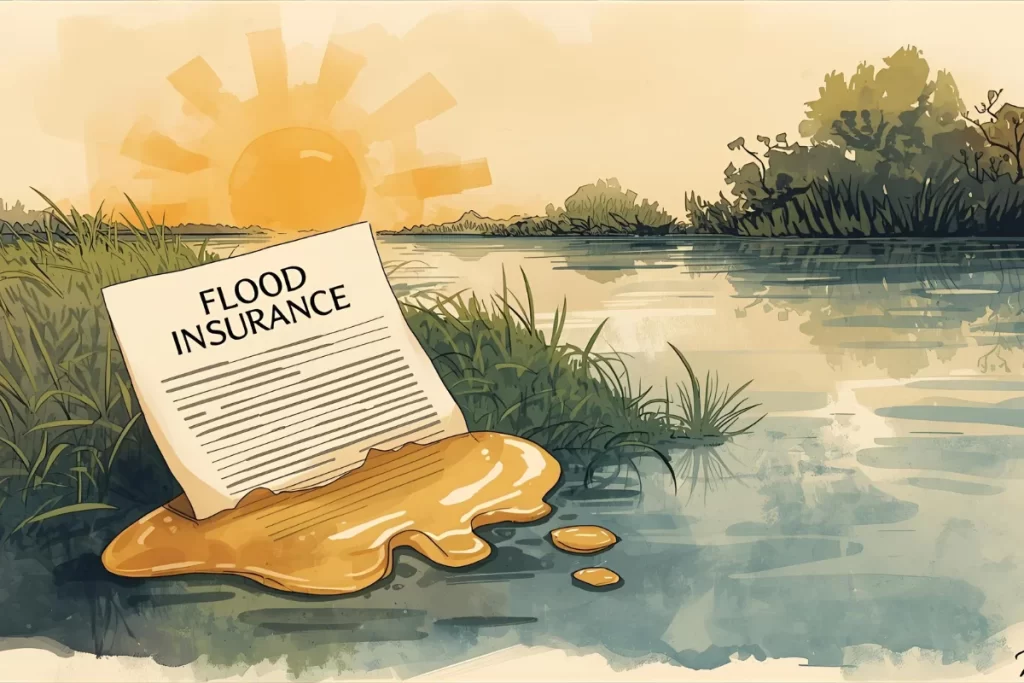
Hollywood and Broward County: our little slice of paradise. We live and work in a beautiful landscape defined by canals, coastal waterways, and proximity to the Atlantic Ocean. But this beauty comes with a non-negotiable risk: flooding. While we are all familiar with the annual threat of hurricanes, the reality is that flooding can, and does, happen anytime, anywhere in South Florida. It can be caused by a heavy, localized summer downpour, a rising tide, or a storm that doesn’t even make a direct hit. The single biggest mistake a homeowner can make is assuming they are protected.
At Finney Insurance Corporation, we are on the front lines of this reality. We’ve seen firsthand the devastation that a foot of water can cause—and the heartbreak of a family discovering their homeowners policy provides no financial relief. The most critical piece of information for any Hollywood homeowner is this: standard homeowners insurance policies do not cover flood damage. It is a universal exclusion, a fundamental gap that must be addressed with a separate policy. As your local insurance experts, we are here to guide you through the complexities of flood insurance and explain why it is an absolute summer imperative for every property in Broward County.
- The Perilous Myth of "Flood Zones"
- The High Cost of Getting Swamped
- Navigating Your Options: NFIP vs. Private Flood Insurance
- National Flood Insurance Program (NFIP)
- Private Flood Insurance
- FAQs About Flood Insurance in Hollywood & Broward County
- Will my homeowners policy cover water damage from a burst pipe or a leaky roof?
- Is there a waiting period for flood insurance to take effect?
- How do I know if I’m in a high-risk flood zone?
- What's the biggest risk of not having flood insurance?
- Can I get flood insurance if my mortgage doesn't require it?
- Finney Insurance: Your Flood Insurance Experts
The Perilous Myth of “Flood Zones”
The concept of FEMA flood zones, while useful, has created a dangerous misconception. Many homeowners who are told they live in a “low-risk” or “X” flood zone feel a false sense of security and choose not to purchase flood insurance. The truth is, flood risk in Florida is not confined to a map.
- Anywhere it rains, it can flood. A “flood” for insurance purposes is defined as a general and temporary condition of partial or complete inundation of two or more acres of normally dry land or of two or more properties from the overflow of inland or tidal waters, or the unusual and rapid accumulation or runoff of surface waters from any source. This means that if a summer storm drops 10 inches of rain on your Hollywood neighborhood and water accumulates on your property and a neighbor’s, it qualifies as a flood, regardless of your FEMA zone.
- The statistics don’t lie. A significant percentage of NFIP flood claims—about 25%—occur in low- or moderate-risk areas. This underscores the fact that the risk of flooding is not determined solely by your property’s proximity to a body of water. Urbanization, over-saturated ground, and overwhelmed storm drains can all cause catastrophic flooding in zones deemed “safe.” A recent example of this was the historic flooding in South Florida in April of 2023, where a localized storm system dropped feet of rain, causing widespread damage and displacing thousands, in areas not considered high-risk.
The High Cost of Getting Swamped
The financial fallout of a flood can be staggering. Unlike a fire, where a claim might be for a portion of the home, a flood can cause total destruction to everything on the lowest level of your property.
- Average Damage Costs: The average flood insurance claim payout in the U.S. is approximately $42,000. However, this average masks the true cost of a significant event. A single inch of water can cause over $25,000 in damage, and it doesn’t take much to cause catastrophic destruction to your home’s foundation, walls, appliances, and personal belongings.
- A National Problem: The National Flood Insurance Program (NFIP) has paid over $73.5 billion in claims to date. This staggering number highlights the immense financial impact of floods on communities nationwide, with a significant portion of those claims coming from Florida.
- No FEMA Bailout: For many, the hope of a federal disaster declaration and FEMA assistance is a last resort. However, this assistance is usually a low-interest loan that you must repay, not a grant. The average FEMA disaster grant for a flood is only about $5,000, a pittance compared to the tens or hundreds of thousands of dollars in damages a flood can cause.
Navigating Your Options: NFIP vs. Private Flood Insurance
For decades, the NFIP was the only game in town for flood insurance. However, as flood risk modeling has improved, a robust private flood insurance market has emerged as a compelling alternative, offering more flexibility and comprehensive coverage.
National Flood Insurance Program (NFIP)
The NFIP provides a standardized, federally-backed flood insurance policy. It’s a reliable and widely available option, but it has some significant limitations:
- Coverage Caps: The NFIP caps its coverage at $250,000 for the building and $100,000 for personal belongings. For many Hollywood homes with higher values, this leaves a huge gap between the replacement cost and what the policy will pay.
- Actual Cash Value for Contents: NFIP policies only pay the actual cash value (ACV) for personal belongings, which means they subtract for depreciation. The check you receive for your damaged sofa or television will not be enough to buy a brand-new replacement.
- No Additional Living Expenses (ALE): The NFIP does not cover the cost of temporary housing, hotel bills, or restaurant meals if a flood makes your home uninhabitable.
Private Flood Insurance
A competitive private flood insurance market has opened up, with many carriers offering policies that address the shortcomings of the NFIP. These policies can be a game-changer for Hollywood homeowners.
- Higher Limits: Private carriers can offer significantly higher coverage limits, often up to $500,000 or more for the building and up to $250,000 for contents—sometimes even higher, depending on the carrier.
- Replacement Cost for Contents: Many private flood policies offer replacement cost coverage for your personal belongings, ensuring you can replace what you lose without financial strain.
- Broader Coverage: Private policies can offer additional coverages not available from the NFIP, such as Additional Living Expenses (ALE), and coverage for basements, pools, and landscaping.
- Potentially Faster Payouts: Private insurers have a financial incentive to provide excellent customer service and a streamlined claims process, often leading to a quicker payout and resolution than a government-run program.
FAQs About Flood Insurance in Hollywood & Broward County
Will my homeowners policy cover water damage from a burst pipe or a leaky roof?
Yes, generally. A homeowners policy covers water damage from a sudden or accidental internal source, like a burst pipe or an appliance leak. It will also cover damage from rain entering through a hole in your roof caused by a windstorm. However, it will not cover damage from water that enters your home from the ground up, which is the definition of a flood.
Is there a waiting period for flood insurance to take effect?
Yes. The NFIP requires a standard 30-day waiting period before a new policy goes into effect. Some private carriers may have a shorter waiting period, but it’s crucial to act now and not wait until a storm is in the forecast.
How do I know if I’m in a high-risk flood zone?
You can check your flood zone by visiting the City of Hollywood’s website or using the FEMA Flood Map Service Center. However, remember that your zone doesn’t determine your risk; it only determines if flood insurance is federally mandated.
What’s the biggest risk of not having flood insurance?
The biggest risk is financial ruin. A flood can destroy everything you own and leave you with a massive debt to rebuild your life. For many, a home is their most valuable asset, and it’s essential to protect it from all possible perils.
Can I get flood insurance if my mortgage doesn’t require it?
Anyone in a participating community (which includes all of Hollywood and Broward County) can purchase flood insurance, regardless of their mortgage lender or flood zone. In fact, doing so is a sign of smart financial planning.
Finney Insurance: Your Flood Insurance Experts
Don’t let the summer storms of Broward County catch you off guard. At Finney Insurance Corporation, we are passionate about protecting our community, and that begins with a serious conversation about flood insurance. We will take the time to:
- Assess your unique risk based on your property’s location and elevation.
- Explain the differences between NFIP and private flood insurance options.
- Provide a no-obligation quote from a range of top-rated carriers.
- Help you find the right coverage with higher limits and broader protection to safeguard your home and financial future.
This hurricane season, be smart. Be prepared. Don’t get swamped. Contact Finney Insurance Corporation today for a consultation and ensure your Hollywood home is fully protected.

