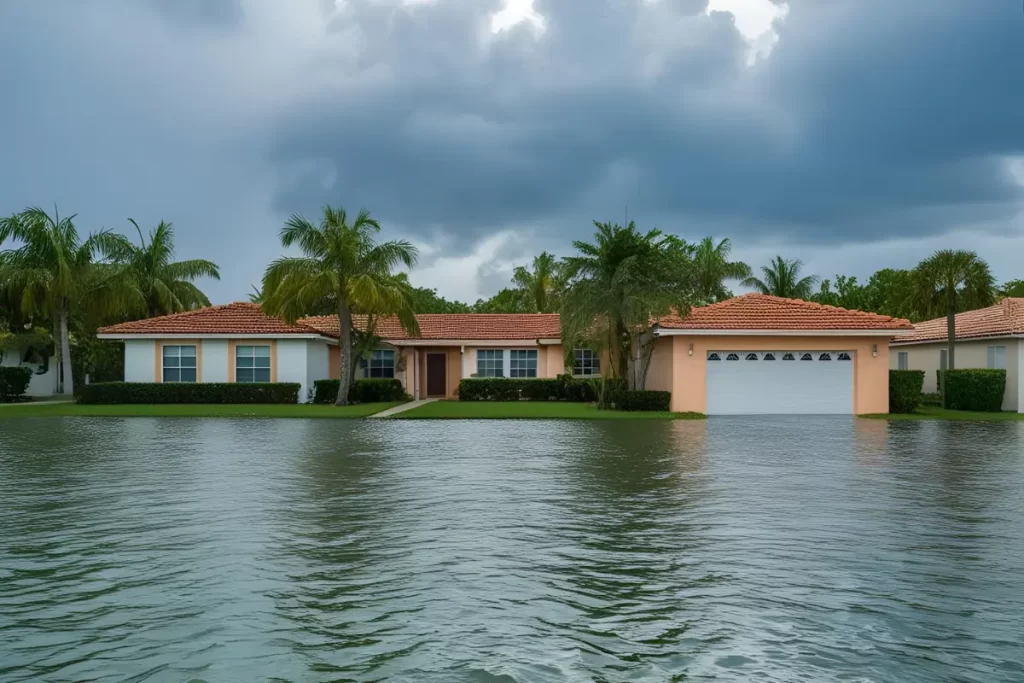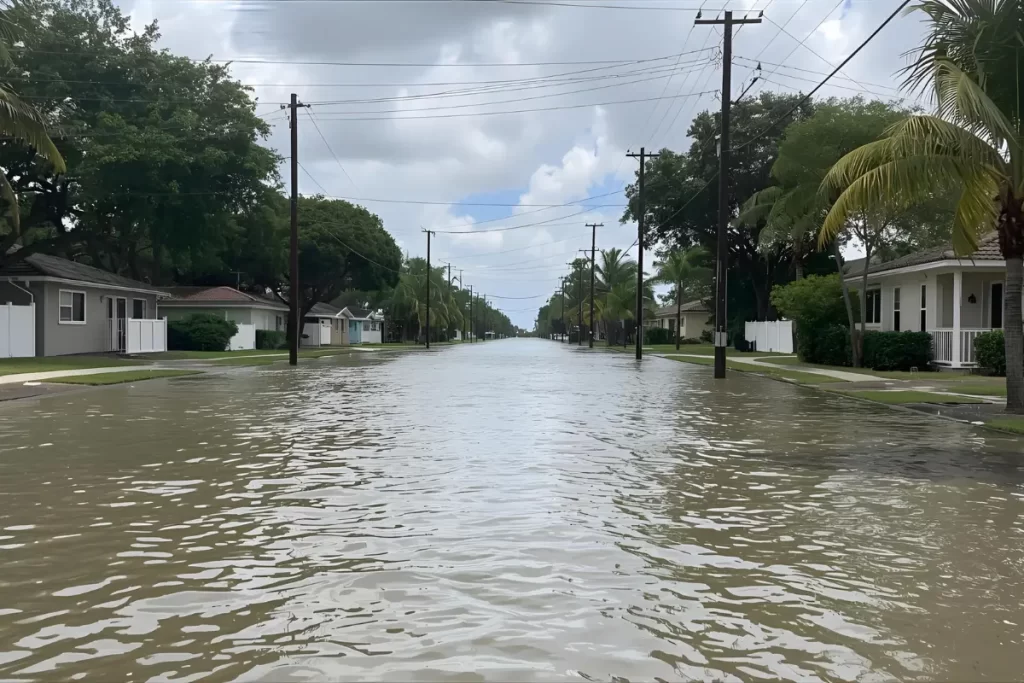
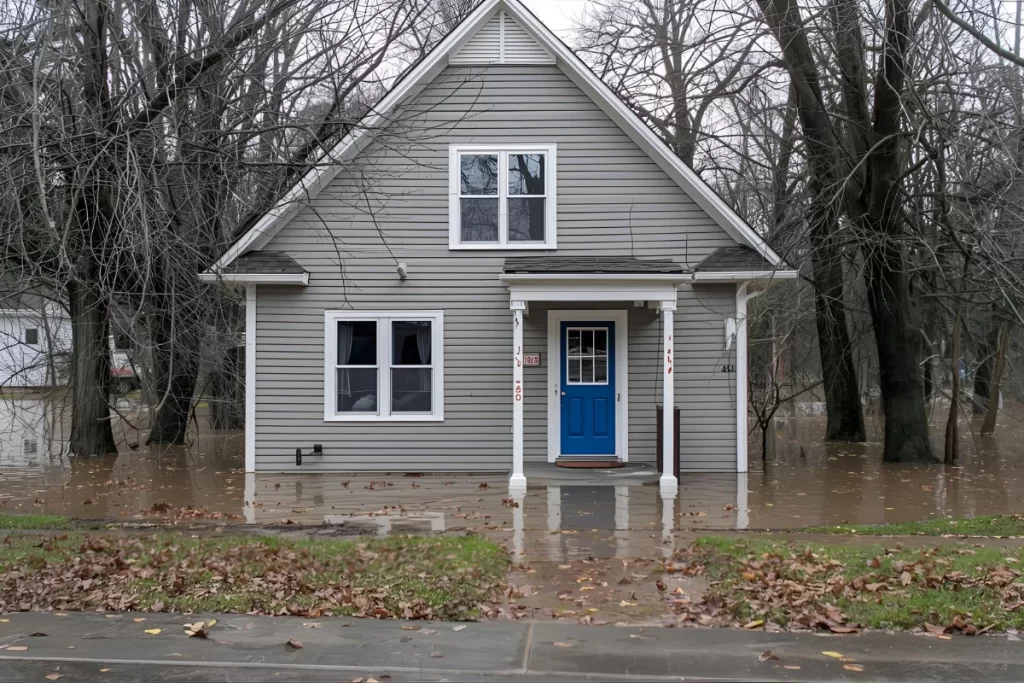
For residents of Hollywood and throughout Broward County, the annual summer spectacle of powerful storms and tropical weather is a fact of life. We secure our shutters, prepare our emergency kits, and stay glued to local news. Yet, for all this preparation, a crucial vulnerability often remains unaddressed: flood insurance and the risk of flood damage. 🌧️
The most dangerous myth in Florida is that a standard homeowners insurance policy will protect you from a flood. It won’t. Flood damage is universally excluded from homeowners insurance policies. This single exclusion is the most significant financial blind spot for Florida homeowners.
For years, the National Flood Insurance Program (NFIP), administered by FEMA, was the only viable option for flood coverage. While it has been a lifeline for millions, it operates as a one-size-fits-all program that may not be sufficient for the modern, high-value properties we see throughout our community. Fortunately, a competitive private flood insurance market has emerged, offering a compelling alternative that provides more tailored and comprehensive protection.
At Finney Insurance Corporation, we are committed to helping our clients understand their options. This guide will explore the key differences between FEMA’s NFIP and a private flood policy and explain why a private option may be the superior choice for your Hollywood property.
The Limitations of the National Flood Insurance Program (NFIP)
The NFIP was created in 1968 to provide flood insurance to properties in flood-prone areas where private insurers were unwilling to provide coverage. While it has served its purpose, its standardized structure has significant limitations that can leave homeowners underinsured.
- Strict Coverage Caps: The NFIP has rigid limits on its coverage. It offers a maximum of $250,000 for the building and $100,000 for personal belongings. In a market like Hollywood, where many homes have a much higher replacement cost, these caps can be a major problem. If your home’s replacement cost is $400,000 and it is destroyed by a flood, you would be left responsible for the remaining $150,000 out of your own pocket. A flood is a total-loss event for a home’s first floor and foundation; these limits are simply not enough to cover the total cost of rebuilding.
- Actual Cash Value for Contents: While the NFIP provides replacement cost coverage for the building itself, it only pays the Actual Cash Value (ACV) for personal property and belongings. This means it will pay you what your property is worth at the time of the loss, taking into account depreciation. Your 5-year-old living room furniture, once worth thousands, may only be worth a fraction of its original value, leaving you with a huge financial shortfall to replace it.
- No Additional Living Expenses (ALE): If a flood makes your home uninhabitable, the NFIP policy does not cover the cost of a hotel, temporary housing, or meals. This is a crucial gap in coverage that can add immense financial stress during an already difficult time.
- A Lengthy Waiting Period: The NFIP has a mandatory 30-day waiting period before a new policy goes into effect. This means you cannot wait until a storm is on its way to purchase a policy; you must plan well in advance.
The Private Market Advantage: A Better Fit for Your Home
For decades, advancements in flood modeling and data analysis have made it possible for private insurers to offer their own flood policies. These policies are designed to be more flexible, comprehensive, and tailored to individual property risk.
- Higher Coverage Limits: This is arguably the biggest benefit for Hollywood homeowners. Private flood insurance carriers can offer significantly higher coverage limits, often up to $500,000 or more for the building and up to $250,000 for contents. This allows you to purchase a policy that truly covers the full replacement cost of your home and belongings. Some companies even offer limits of up to $4 million, providing protection for high-value properties that are completely under-served by the NFIP.
- Replacement Cost for Contents: A major selling point of many private policies is the option to include replacement cost coverage for your personal property. This ensures that you receive the amount needed to replace your damaged belongings with brand-new ones, without a deduction for depreciation.
- Broader and More Flexible Coverage: Private policies are not constrained by the same rigid rules as the NFIP. This allows them to offer valuable additional coverages, including:
- Additional Living Expenses (ALE): Many private policies include this critical coverage, paying for temporary housing and other related expenses if a flood displaces you.
- Coverage for Basements and Pools: Some private policies provide coverage for damage to swimming pools, basements, and even landscaping, which are all typically excluded by the NFIP.
- Less Restrictive Waiting Periods: While private carriers may still have a waiting period, it is often much shorter than the NFIP’s 30-day rule, sometimes as little as 10-14 days.
- A Potentially Faster Claims Process: Private insurers have a financial incentive to provide excellent customer service and a streamlined claims process. Many private carriers boast faster response times and more efficient claims resolution, which is invaluable when you are facing the stress of a flood event.
The Numbers Tell the Story
The data shows that flood risk is a serious concern for all Florida residents, regardless of their mapped flood zone. Approximately 25% of all flood claims paid by the NFIP come from properties located in low-to-moderate risk areas. This highlights the dangerous reality that “anywhere it rains, it can flood.”
The private flood insurance market is growing rapidly in Florida, with the state accounting for a significant portion of the total private flood insurance policies nationwide. This growth is driven by consumer demand for better, more flexible options and more accurate risk modeling by private insurers.
FAQs About Flood Insurance
Do I need flood insurance if I don’t live in a high-risk flood zone?
Yes. Roughly 25% of all flood claims come from properties not located in high-risk zones. Factors like heavy rainfall, over-saturated ground, and overwhelmed storm drains can cause flooding anywhere in Broward County.
Is my homeowners insurance policy a substitute for flood insurance?
No, absolutely not. Standard homeowners and renters insurance policies explicitly exclude damage from floods. You must purchase a separate flood insurance policy to be protected.
How much does flood insurance cost?
The cost of flood insurance varies based on your property’s flood risk, location, elevation, and the amount of coverage you choose. Private flood insurance premiums can be competitive with NFIP rates, and sometimes even lower, especially for properties with a lower risk profile.
How do I get flood insurance?
Flood insurance is not sold directly by the federal government. You must purchase it through an insurance agent who is authorized to sell NFIP or private flood policies. Finney Insurance Corporation is authorized to do both, allowing us to provide you with all your options.
What is the biggest risk of not having flood insurance?
Without flood insurance, you are responsible for 100% of the costs to repair your home and replace your belongings. While federal disaster assistance is sometimes available, it typically comes in the form of a low-interest loan that you must repay, not a grant.
Finney Insurance: Your Flood Insurance Experts
In Hollywood, your home is a major investment. Don’t let a major hurricane or a surprise summer storm put it all at risk. While the NFIP provides a foundational level of protection, the private flood insurance market offers a compelling and often superior alternative for homeowners who demand more.
At Finney Insurance Corporation, we are committed to helping our clients navigate these complex decisions. We’ll assess your specific flood risk, compare coverage options and pricing from both the NFIP and private carriers, and find the right policy to give you peace of mind this hurricane season.
Contact Finney Insurance Corporation today for a personalized flood insurance consultation. Let us help you ensure that you’re fully prepared for whatever the weather may bring.
To better understand the pros and cons of private flood insurance, you can watch this video: A quick guide to private flood insurance vs. FEMA.