
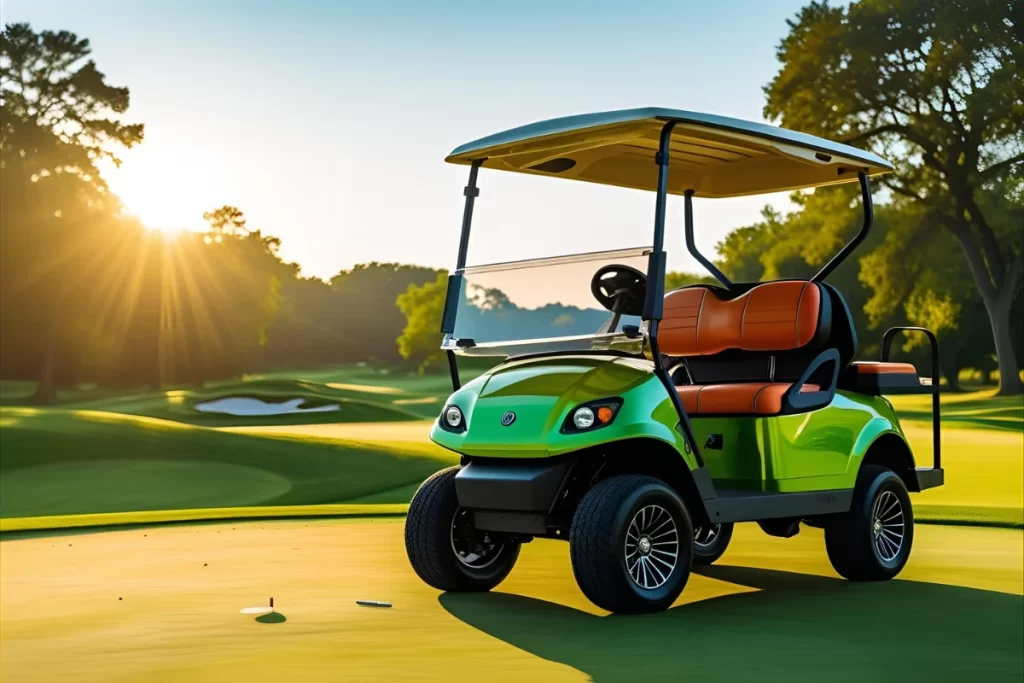
In Hollywood and across Broward County, the golf cart has transcended its traditional role on the golf course. These versatile vehicles have become a common sight in many communities, serving as convenient modes of transportation for short errands, social visits, and leisurely drives. From gated communities with dedicated paths to designated streets in certain neighborhoods, golf carts offer an appealing blend of practicality and leisure, embodying the relaxed South Florida lifestyle. However, as their presence on public roads grows, so too does the need for proper insurance coverage.
While golf carts may seem like harmless recreational vehicles, accidents can and do happen, leading to significant injuries and property damage. Understanding Florida’s laws regarding golf cart operation, particularly the distinction between a “golf cart” and a “Low-Speed Vehicle (LSV),” is crucial for determining your insurance requirements and protecting yourself and your assets. Finney Insurance is here to help Broward County residents and businesses navigate the complexities of golf cart insurance, ensuring you’re covered whether you’re on the course or cruising through your neighborhood.
Golf Cart vs. Low-Speed Vehicle (LSV): A Critical Distinction in Florida Law
The most important factor in determining your golf cart’s insurance requirements in Florida is whether it’s classified as a standard golf cart or a Low-Speed Vehicle (LSV).
- Golf Cart (Standard): Under Florida Statute 320.01(22), a golf cart is defined as a motor vehicle designed and manufactured for operation on a golf course for sporting or recreational purposes, not capable of exceeding 20 miles per hour.
- Insurance Requirement: For standard golf carts used solely on golf courses or private property, Florida law generally does not require them to be titled, registered, or insured with PIP (Personal Injury Protection) or PDL (Property Damage Liability) coverage
- However, this does not mean insurance is unnecessary. As we’ll discuss, significant risks remain.
- Low-Speed Vehicle (LSV): Florida Statute 320.01(42) defines an LSV as a four-wheeled electric vehicle (though some gas LSVs exist) whose top speed is greater than 20 miles per hour but not greater than 25 miles per hour. LSVs are essentially golf carts that have been modified or manufactured to meet specific safety and speed criteria for street use.
- Insurance Requirement: If your golf cart is classified as an LSV, it is considered a motor vehicle under Florida law and MUST be titled, registered, and insured in accordance with Florida’s motor vehicle statutes. This requires:
- Personal Injury Protection (PIP): $10,000 minimum.
- Property Damage Liability (PDL): $10,000 minimum.
- Required Equipment for LSVs: To be street-legal, an LSV must be equipped with headlamps, stop lamps, turn signal lamps, taillamps, reflex reflectors, parking brakes, rearview mirrors, a windshield, and seat belts for each designated seating position. It must also have a Vehicle Identification Number (VIN).
- Insurance Requirement: If your golf cart is classified as an LSV, it is considered a motor vehicle under Florida law and MUST be titled, registered, and insured in accordance with Florida’s motor vehicle statutes. This requires:
Where Can Golf Carts Be Used on City Streets in Broward County?
Florida Statute 316.212 outlines the conditions under which golf carts (both standard and LSVs) can be operated on public roads. It’s crucial to remember that local ordinances in Broward County cities, including Hollywood, can further restrict or permit usage.
- Designated Roads: Golf carts (both types) can only be operated on public roads or municipal streets that have been specifically designated for golf cart use by the appropriate local governmental entity (e.g., city or county ordinance). These roads must have a posted speed limit of 30 mph or less.
- Crossing Highways: Golf carts may be operated to cross a portion of a highway that intersects a county road or municipal street, or to cross a highway where a golf course or mobile home park is located on both sides. The posted speed limit on the highway section being crossed cannot exceed 45 mph, and the crossing must be at an intersection with a traffic control device.
- State Park Roads: Golf carts may be operated on a road that is part of the State Park Road System if the posted speed limit is 35 mph or less.
- Sunrise to Sunset Rule: Standard golf carts (not LSVs) can generally only be operated between sunrise and sunset unless specifically permitted by local ordinance and the golf cart is equipped with headlights, brake lights, turn signals, and a windshield for night operation. LSVs, with their required lighting, can operate after dark where permitted.
- Sidewalks and Bike Paths: Generally, golf carts are not allowed on sidewalks or bicycle paths unless the path is specifically designated for golf cart use.
- Driver Requirements: As of July 1, 2023, anyone operating a golf cart on a public road or street must have a valid driver’s license or learner’s permit if between 15-17 years old. Operators 18 and older need a valid government-issued photo ID.
- Local Ordinances in Broward County: While Florida law sets the framework, cities like Hollywood, Fort Lauderdale, Plantation, and others in Broward County may have specific ordinances that designate certain roads for golf cart use, establish additional equipment requirements, or set specific hours of operation. It is imperative to check with your local city’s municipal code or police department to confirm the specific rules in your neighborhood or intended travel area. Many gated communities, such as those popular with retirees or those built around golf courses, may have internal rules that differ from public road regulations.
Why Golf Cart Insurance is a Smart Investment (Even When Not Required)
Even if your golf cart doesn’t legally require insurance as a standard golf cart (i.e., it doesn’t exceed 20 mph), purchasing a dedicated policy is a highly recommended and prudent decision. Golf cart accidents can result in serious injuries and substantial property damage, leaving you personally liable for potentially massive costs without coverage.
Consider these common scenarios and how insurance can protect you:
- Bodily Injury Liability:
- You accidentally hit a pedestrian or cyclist while driving through a common area in your community.
- A passenger falls out of your golf cart, sustaining a serious injury due to a sharp turn or sudden stop.
- Your teen driver (even if licensed) misjudges a turn and collides with another golf cart, injuring its occupants.
- Without coverage, you are personally responsible for medical bills, lost wages, and potential lawsuits.
- Property Damage Liability:
- You lose control and hit a neighbor’s parked car, damaging their vehicle.
- Your golf cart crashes into someone’s fence, mailbox, or even their home.
- You would have to pay for all repairs out of pocket.
- Collision Coverage:
- Your golf cart flips over while navigating a curb or making a sharp turn.
- You collide with another golf cart or a parked object.
- Covers damage to your own golf cart, which can be expensive to repair or replace.
- Comprehensive Coverage:
- Your golf cart is stolen from your driveway or a common area.
- It’s damaged by vandalism, fire, or severe weather (like falling tree limbs during a hurricane).
- Covers non-collision damage to your golf cart.
- Medical Payments:
- Provides coverage for medical expenses for you and your passengers, regardless of fault, after a golf cart accident. This can supplement your health insurance or cover deductibles.
- Uninsured/Underinsured Motorist (UM/UIM):
- While often associated with cars, if your golf cart is involved in an accident with another golf cart or vehicle whose driver is uninsured or doesn’t have enough coverage, UM/UIM can protect you and your passengers’ medical costs and other damages.
How Finney Insurance Can Help Broward County Golf Cart Owners
At Finney Insurance Corporation, we understand that a golf cart is more than just a leisure vehicle for many in Broward County – it’s an integral part of their lifestyle. We specialize in providing tailored insurance solutions that fit your specific needs and the unique local laws.
Our experienced agents can:
- Clarify Classification: Help you determine if your golf cart is a standard golf cart or an LSV, and what that means for your legal insurance requirements.
- Navigate Local Ordinances: Advise on the specific golf cart regulations in Hollywood and other Broward County cities where you intend to operate.
- Assess Your Risk: Understand how and where you use your golf cart (golf course, private community, designated public streets) to recommend the most appropriate coverage.
- Explain Coverage Options: Detail the benefits of liability, collision, comprehensive, medical payments, and UM/UIM coverage for your golf cart.
- Provide Competitive Quotes: Shop our network of top-rated insurance carriers to find you the best rates for the coverage you need.
- Bundle and Save: Often, golf cart insurance can be added as an endorsement to your homeowners policy or even a standalone policy with specialized providers. We can help you explore bundling options for potential savings.
Don’t let the convenience and fun of golf cart ownership turn into a financial nightmare. Protect your investment and your peace of mind. Contact Finney Insurance Corporation today for a free consultation and let us help you secure the right golf cart insurance for your Broward County lifestyle.